Slant Bed vs Flat Bed CNC Lathe: Engineering Comparison for B2B Procurement
A comprehensive technical comparison between 45-degree slant bed turning centers and industrial flat bed CNC lathes: chip management, thermal stability, rigidity, automation, and tooling cost.
The Core Dilemma in Workshop Turning Investment
When upgrading from manual turning or expanding a CNC machine fleet, manufacturers face a decisive fork in the road: Slant Bed CNC Lathes (TCK Series) versus Flat Bed CNC Lathes (CK Series).
While both machines execute G-code turning cycles, their internal ergonomics, structural rigidity, and chip evacuation physics dictate vastly different production environments.
Direct Technical Comparison
| Feature / Metric | Slant Bed CNC Lathe (TCK50 / TCK52) | Flat Bed CNC Lathe (CK6140 / CK6150) |
|---|---|---|
| Bed Angle | 45° (or 30°/60°) Monolithic Slanted Bed | 0° Horizontal Flat Bed |
| Chip Evacuation | Falls directly by gravity into conveyor; zero accumulation | Chips accumulate on horizontal bedways; requires manual clearing |
| Thermal Growth | Spindle and bed expand away from the tool; thermal neutral | Heat from hot chips on bed causes Z-axis thermal drift |
| Turret System | 8/12-Station Hydraulic or Servo Turret (0.2s index) | 4-Station Vertical or 6-Station Horizontal Toolpost (1.5-3s index) |
| Live Tooling Option | Readily available (BMT55/65 milling heads + C-axis) | Rarely practical; limited to simple auxiliary drill heads |
| Rapid Traverse | 24 - 30 m/min (Roller Guideways) | 6 - 10 m/min (Hardened Box/Prism Ways) |
| Primary Sweet Spot | Mass production, shafts, precision bushings, turn-mill | Large diameter pipes, long shafts, toolroom maintenance, heavy forgings |
| Capital Investment | Moderate to High (Faster cycle amortization) | Low to Moderate (Lowest initial entry cost) |
1. Chip Evacuation: The Hidden Factor in Automated Production
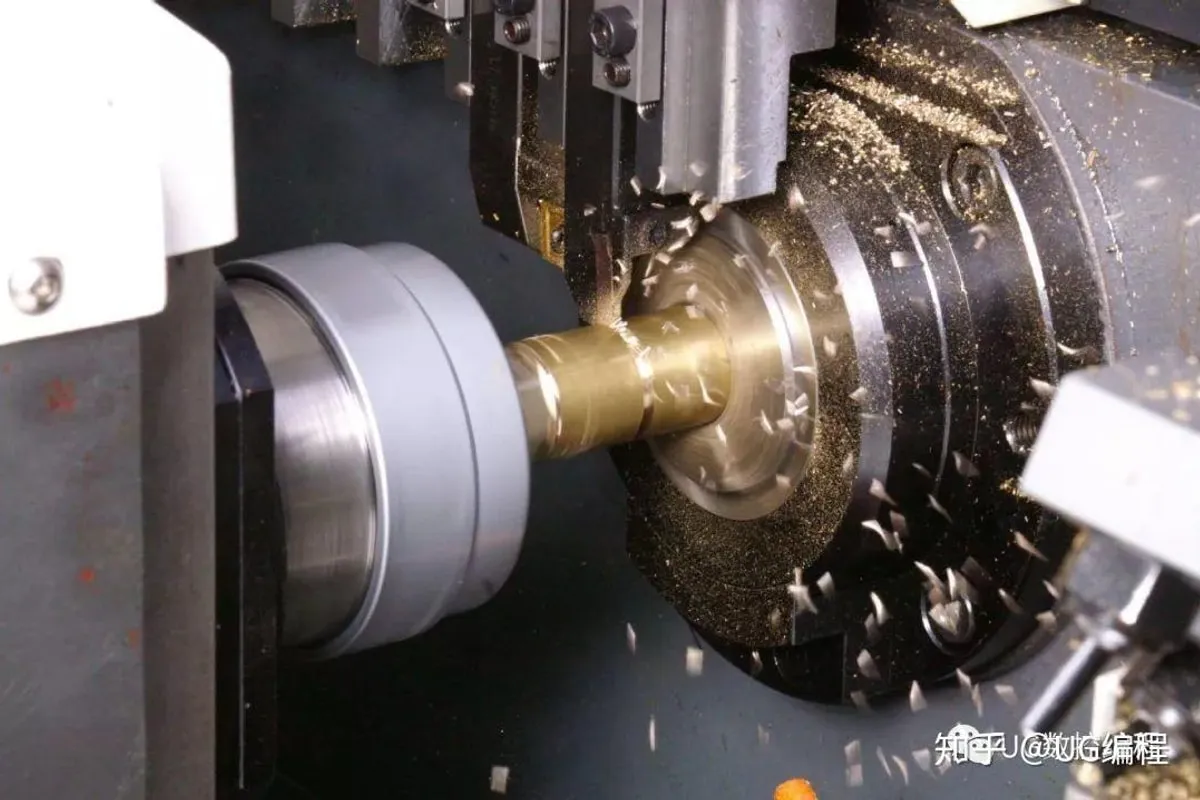
In high-volume turning of ductile steel or stainless steel, continuous stringy chips pose a severe operational risk.
On a flat bed lathe, chips pile directly atop the horizontal guideways and ballscrew cover. Without an operator continuously raking chips, they wrap around the chuck and workpiece, scratching finished diameters and damaging way covers.
On a 45° slant bed lathe, the cutting force vectors and natural gravity pull chips straight into the lower trough, where the chain-type chip conveyor clears them continuously. This enables true unattended “lights-out” operation with bar feeders.
2. Dynamic Rigidity & Tool Force Vectors
During turning, the cutting tool experiences downward and backward separation forces.
On a 45° slant bed, the thrust vectors align perpendicular to the triangular Meehanite bed casting. This provides exceptional resistance to torsional twisting. Operators can run cutting depths of 4.0 to 6.0 mm per pass with zero harmonic squeal.
3. Decision Matrix: Which Should You Buy?
Select a Slant Bed Lathe (TCK50, TCK52, TCK56) if:
- Your order volume exceeds 500 pieces per batch.
- You want to integrate an automatic bar feeder, parts catcher, or gantry robot loader.
- You need secondary milling operations (hex flats, keyways, cross-holes) completed on the lathe.
- Part tolerances are within ±0.005 mm across multi-shift production.
Select a Flat Bed Lathe (CK6140, CK6150, CK6160) if:
- You operate a maintenance facility, job shop, or repair shipyard with low volumes (1 - 50 pieces).
- You frequently turn large-diameter workpieces (> 500 mm) or very long shafts (> 1.5 meters).
- You need a cost-effective CNC solution with the lowest initial capital outlay.
Need an Objective Engineering Recommendation?
Mainland CNC manufactures both heavy-duty flat bed lathes and precision slant bed turning centers. Send your part prints to xiuc32860@gmail.com for a free cycle-time simulation and machine recommendation.
Precisa da máquina ideal para usinar suas peças? Converse diretamente com nossos engenheiros.
Send us your component drawings or cutting requirements. Our engineering team will simulate cycle times, recommend tooling packages, and provide factory-direct CIF pricing.